
Currently Empty: 0.00
How to Store Vegetables: 10 Powerful Ways to Keep Them Fresh Longer
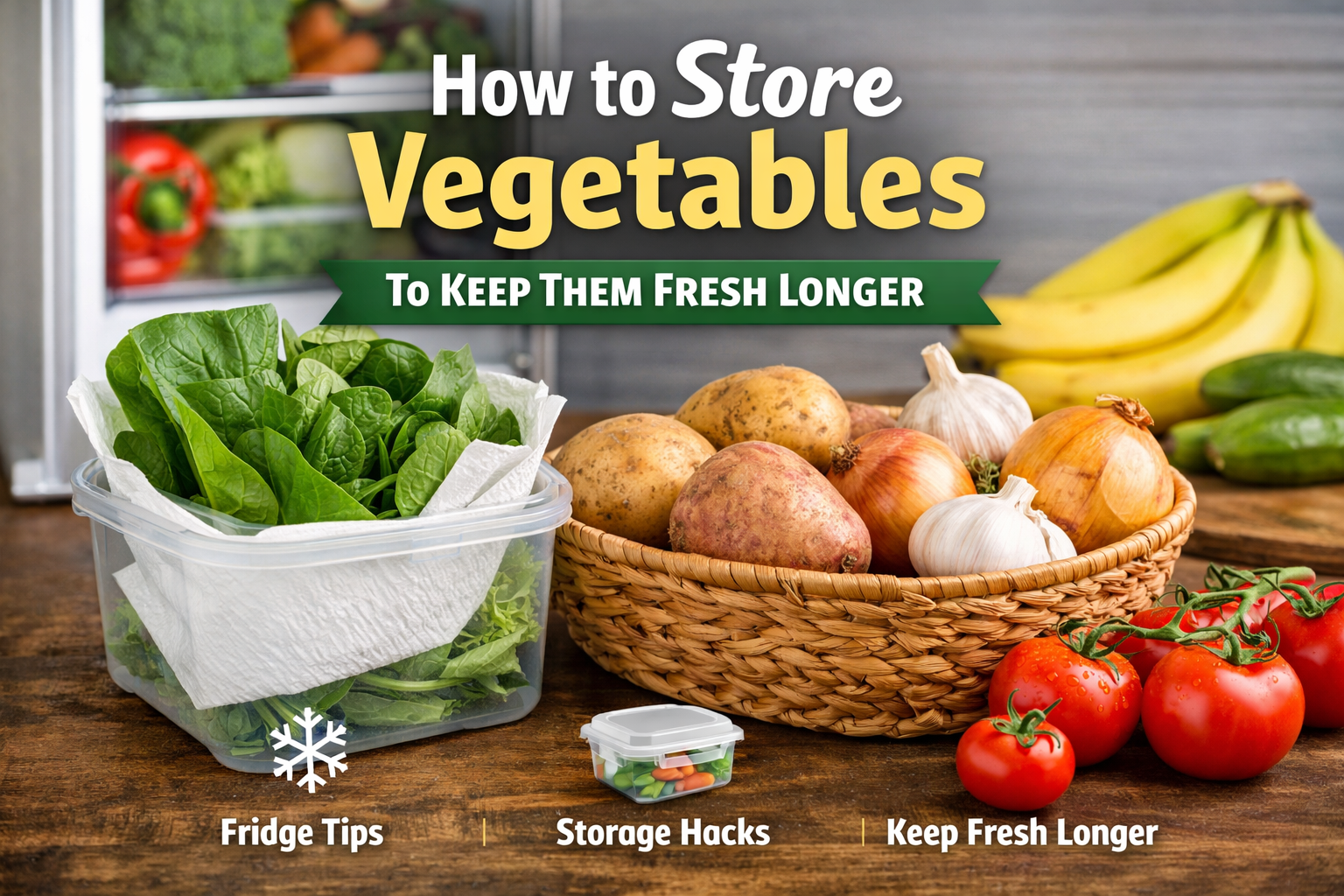
How to store vegetables properly is essential if you want to keep them fresh longer, reduce food waste, and save money. In this complete guide, you will learn practical and easy ways to store vegetables correctly so they stay fresh, crisp, and nutritious for days.
If you live in Fujairah, UAE, or any warm area, these vegetable storage tips can help you protect your groceries from early spoilage and improve your daily kitchen routine.
📑 Table of Contents
- Why Proper Vegetable Storage Matters
- 1. Store Vegetables in the Fridge Correctly
- 2. Use the Right Storage Containers
- 3. Store Leafy Greens Properly
- 4. Keep Root Vegetables Dry
- 5. Do Not Store Tomatoes in the Fridge
- 6. Separate Ethylene-Producing Vegetables
- 7. Avoid Washing Before Storage
- 8. Store Cut Vegetables Properly
- 9. Avoid Common Storage Mistakes
- 10. Extra Tips to Keep Vegetables Fresh Longer
- Bonus Tips for Storing Vegetables in Hot Weather
- Buy Fresh Vegetables
- FAQ About How to Store Vegetables
- Final Thoughts
Why Proper Vegetable Storage Matters
Understanding how to store vegetables the right way helps you save money, reduce waste, and keep your food fresh for longer. Proper storage also helps vegetables maintain their taste, texture, and nutrients.
- Reduces food waste
- Keeps vegetables fresh longer
- Saves money on shopping
- Maintains nutrition and taste
- Makes meal preparation easier
You can also read more about healthy food benefits to build better daily eating habits.
1. Store Vegetables in the Fridge Correctly
Not all vegetables should be stored the same way. Some need refrigeration, while others stay fresher outside the fridge.
Keep in the fridge:
- Carrots
- Broccoli
- Spinach
- Cucumber
- Capsicum
- Lettuce
Do not refrigerate:
- Potatoes
- Onions
- Garlic
- Whole tomatoes
To understand different produce groups better, check this vegetable categories guide.
2. Use the Right Storage Containers
Using the right containers is a big part of learning how to store vegetables. Good containers help control moisture and airflow, which are both very important for freshness.
- Use breathable or perforated bags
- Use paper towels to absorb moisture
- Use airtight containers for cut vegetables
- Keep storage containers clean and dry
Too much moisture can make vegetables rot faster, while poor airflow can trap humidity and reduce shelf life.
3. Store Leafy Greens Properly
Leafy greens like spinach, coriander, parsley, and lettuce spoil quickly if they are not stored well. Wrap them gently in paper towels and keep them in airtight containers or clean zip bags.
This simple method helps keep leafy vegetables fresh longer and reduces sogginess.
4. Keep Root Vegetables Dry
Root vegetables should be stored in cool, dry, and ventilated places. Potatoes, onions, and garlic do not do well in damp areas.
- Store them away from direct sunlight
- Do not keep them in sealed plastic bags
- Use baskets or ventilated trays when possible
Dry storage is one of the easiest ways to extend the shelf life of root vegetables.
5. Do Not Store Tomatoes in the Fridge
Whole tomatoes lose flavor and texture when stored in the fridge. They should be kept at room temperature until they are fully ripe.
For more detailed tips, read our tomato storage tips.
6. Separate Ethylene-Producing Vegetables
Some vegetables and fruits release ethylene gas, which speeds up ripening and spoilage. Tomatoes and bananas are common examples.
Keep ethylene-producing items away from sensitive vegetables to help them stay fresh longer.
7. Avoid Washing Before Storage
Washing vegetables before storage can leave moisture on the surface, which leads to quicker spoilage. In most cases, it is better to wash vegetables just before cooking or eating them.
This is a simple but powerful storage habit that helps reduce waste.
8. Store Cut Vegetables Properly
Cut vegetables spoil faster than whole vegetables. Always store them in airtight containers and keep them in the fridge.
- Use within 1 to 2 days
- Keep them sealed properly
- Do not mix old and fresh cut vegetables together
Proper storage of cut vegetables is especially useful for busy families who prep meals in advance.
9. Avoid Common Storage Mistakes
Many people reduce freshness without realizing it. Here are some common mistakes:
- Keeping all vegetables in the fridge
- Storing vegetables while wet
- Using containers with no airflow
- Keeping spoiled vegetables with fresh ones
- Overcrowding the fridge
Avoiding these mistakes can significantly improve how long your vegetables stay fresh.
10. Extra Tips to Keep Vegetables Fresh Longer
Here are a few extra habits that make a big difference:
- Keep fridge temperature between 1°C and 4°C
- Check vegetables regularly
- Remove spoiled items quickly
- Store similar vegetables together
- Use older vegetables first
These small steps help you manage your kitchen better and waste less food.
Bonus Tips for Storing Vegetables in Hot Weather
If you live in a hot place like the UAE or Bangladesh, proper vegetable storage becomes even more important. Heat can spoil vegetables faster, especially leafy greens and cut produce.
- Keep vegetables away from direct sunlight
- Use fridge vegetable drawers when possible
- Do not overload the fridge
- Buy fresh vegetables more regularly in smaller amounts
- Keep kitchen storage areas cool and dry
According to Healthline, proper vegetable storage helps maintain freshness and nutrients.
Buy Fresh Vegetables
Good storage starts with fresh produce. If vegetables are already old when you buy them, they will not last long at home.
You can buy fresh vegetables here for better quality and longer shelf life.
If you are looking for fresh vegetables in Fujairah, UAE, choose a trusted local shop for better daily quality and freshness.
👉 Visit Malek Fruits & Vegetables Shop for fresh daily vegetables near you.
FAQ About How to Store Vegetables
What is the best way to store vegetables?
The best way depends on the type. Leafy greens should go in the fridge, while root vegetables should stay in a cool and dry place.
Should all vegetables be refrigerated?
No. Potatoes, onions, garlic, and whole tomatoes should not be refrigerated.
How long do vegetables stay fresh?
Most vegetables stay fresh for 3 to 7 days, depending on the type and storage method.
Should I wash vegetables before storing them?
It is usually better to wash vegetables before use, not before storage.
How do I keep vegetables fresh in hot weather?
Keep vegetables cool, dry, and away from sunlight. Use the fridge properly and buy fresh produce in smaller amounts.
Final Thoughts
Now you know how to store vegetables properly. These simple methods can help you keep vegetables fresh longer, reduce waste, and save money every week.
With better storage habits, you can enjoy fresher produce, improve your meals, and make smarter shopping decisions for your home.
Learning how to store vegetables correctly can save money and reduce waste in your daily life.
If you understand how to store vegetables properly, you can keep your kitchen organized and your food fresh longer.

